
The question "do LED lights help plants grow" has become a cornerstone of modern horticulture, especially as indoor farming and controlled-environment agriculture gain momentum.
As a leading LED grow light manufacturer, we delve into the scientific evidence, real-world applications, and comparative advantages that make LED technology indispensable for plant growth.
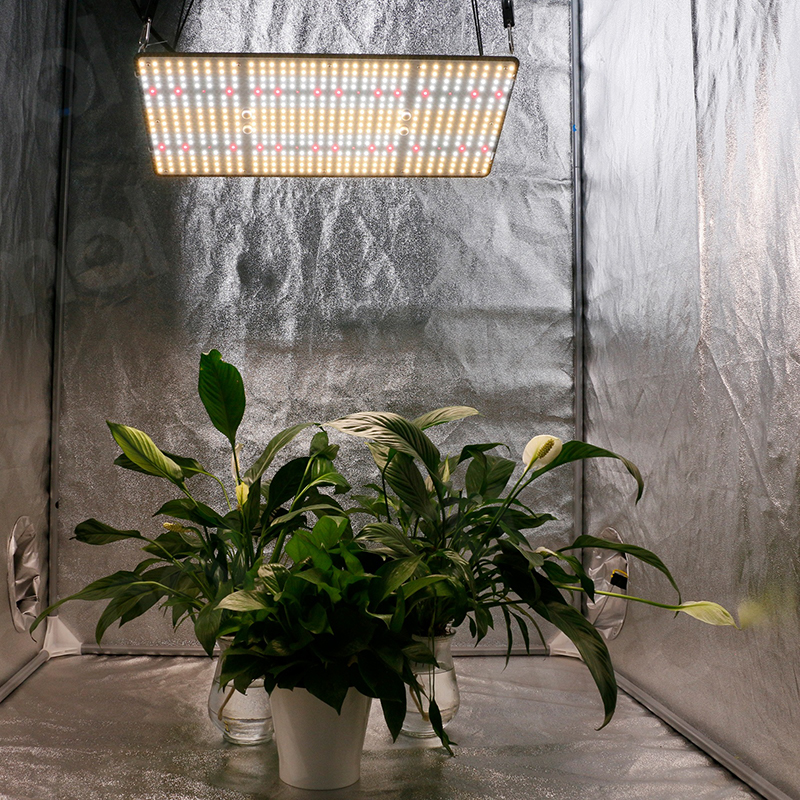
LED Lights Optimize Photosynthesis Through Tailored Spectrum
The core mechanism behind "do LED lights help plants grow" lies in their ability to deliver precise light spectra that match plant photosynthetic needs. Unlike traditional lighting (e.g., fluorescent or HID lamps), LEDs emit wavelengths that align with chlorophyll absorption peaks-primarily 450 nm (blue) and 660 nm (red).Studies show that blue light enhances leaf development and stomatal regulation, while red light promotes stem elongation and flowering.
For example, a 2015 experiment demonstrated that adjusting the red-to-blue (R/B) ratio in LED systems increased lettuce yields by 25% compared to fluorescent lighting.Similarly, cucumber seedlings exposed to optimized LED spectra showed improved root-to-shoot ratios, highlighting how "do LED lights help plants grow" by fine-tuning spectral outputs for specific crops.
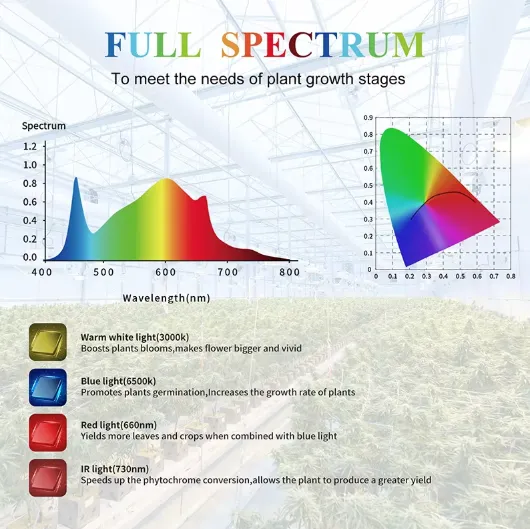
LED Lights Optimize Photosynthesis Through Tailored Spectrum
The core mechanism behind "do LED lights help plants grow" lies in their ability to deliver precise light spectra that match plant photosynthetic needs. Unlike traditional lighting (e.g., fluorescent or HID lamps), LEDs emit wavelengths that align with chlorophyll absorption peaks-primarily 450 nm (blue) and 660 nm (red).Studies show that blue light enhances leaf development and stomatal regulation, while red light promotes stem elongation and flowering.
For example, a 2015 experiment demonstrated that adjusting the red-to-blue (R/B) ratio in LED systems increased lettuce yields by 25% compared to fluorescent lighting.Similarly, cucumber seedlings exposed to optimized LED spectra showed improved root-to-shoot ratios, highlighting how "do LED lights help plants grow" by fine-tuning spectral outputs for specific crops.
Energy Efficiency: Lower Costs, Higher Yields
A critical advantage of LED grow lights is their energy efficiency, which directly addresses the economic aspect of "do LED lights help plants grow." LEDs convert up to 60% of energy into usable light, far surpassing HID lamps (30%) or fluorescent bulbs (10%). This efficiency reduces operational costs by 50–60%, making indoor farming economically viable.
In a controlled trial, spinach grown under LED lighting required 20% less energy than under metal halide lamps while achieving faster growth rates. Additionally, LEDs produce minimal heat, allowing closer proximity to plants without risking thermal damage-a limitation of traditional lighting.
Controlled Photoperiods and Growth Cycles
"Do LED lights help plants grow" also hinges on their ability to manipulate photoperiods (light duration) and light intensity. LEDs enable programmable light cycles, such as simulating dawn/dusk transitions or extending daylight hours, which are critical for crops like tomatoes or cannabis.
For instance, medical cannabis grown under LED systems in Canada achieved THC levels of 26–30%-significantly higher than outdoor-grown variants (15%). This precision ensures consistent quality, a key factor in commercial horticulture.