

When it comes to learning how to hang LED grow lights, there's no one-size-fits-all solution-the right hanging method depends entirely on your specific growing scenario.
Whether you're a hobbyist tending to a few houseplants on a windowsill, a home grower managing a small indoor tent, or a commercial cultivator running a large greenhouse, factors like plant type, growth stage, space size, and light coverage needs will dictate how you mount and position your LED grow lights.
Different growing scenarios call for tailored LED grow light selections, supporting accessories, and hanging techniques to ensure optimal light delivery.
For indoor houseplant growing (e.g., pothos, succulents, or herbs on shelves/windowsills), compact LED grow light panels or clip-on LED grow lights are ideal-they're lightweight and don't require complex mounting.


Hanging With Hooks

Fixing on racking
Magnetic Quantum Board
Magnetic Sticker Mount
3 pcs daisy Chain

For grow tent setups (common for vegetables, flowers, or cannabis), small wattage full-spectrum LED grow light bars are preferred, as they offer focused coverage for enclosed spaces with slight energy comsume. Essential accessories include heavy-duty ceiling hooks (rated for 20+ pounds), stainless steel ratchet hangers, and light timers: install the hooks into the tent's ceiling poles, attach the ratchet hangers to the light's mounting points, and use the ratchet mechanism to fine-tune height (12-18 inches for flowering plants, 18-24 inches for vegetative growth) - this setup also allows easy adjustment as plants grow.
Quantum Board
YoYo Hanging Rope
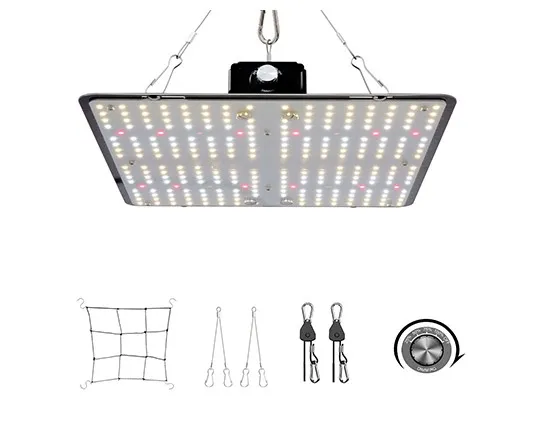

For commercial greenhouses, high-output LED grow light arrays or linear LED grow lights are necessary to cover large areas. Use industrial-grade ceiling mounting rails and cross bars, adjustable suspension cables, and light dimmers: mount the rails parallel to the plant rows, hang the light arrays from the rails via cables, and space them 2-4 feet apart (depending on wattage) to ensure uniform coverage-adjust the cable length to maintain a 24-36 inch distance from tall crops like tomatoes or peppers.

Greenhouse Top lights


No matter the scenario, always check the light's weight capacity for accessories and ensure secure mounting to avoid falls.Each scenario requires tailored lights, accessories, and hanging techniques.